The Ranger: Main Divide's Hunting Jacket for NZ's Cold, Damp Backcountry
There's a moment every NZ hunter knows. The temperature drops on the tops, the drizzle sets in, and you reach into your pack for your puffer. That jacket either earns its place right there - or it doesn't.
For a hunting jacket in NZ to earn its place, it needs to handle what our mountains actually deliver - and that's rarely dry. They're warm on a sunny winter's day in Queenstown, fine for hanging around camp when conditions are stable. But take untreated down into the sustained damp of a Fiordland valley, a wet Kaikōura Range pack-out, or a drizzly morning in the Ruahines - and it starts to collapse. Wet down loses loft. Lost loft means lost warmth. That's not a theory, it's physics.
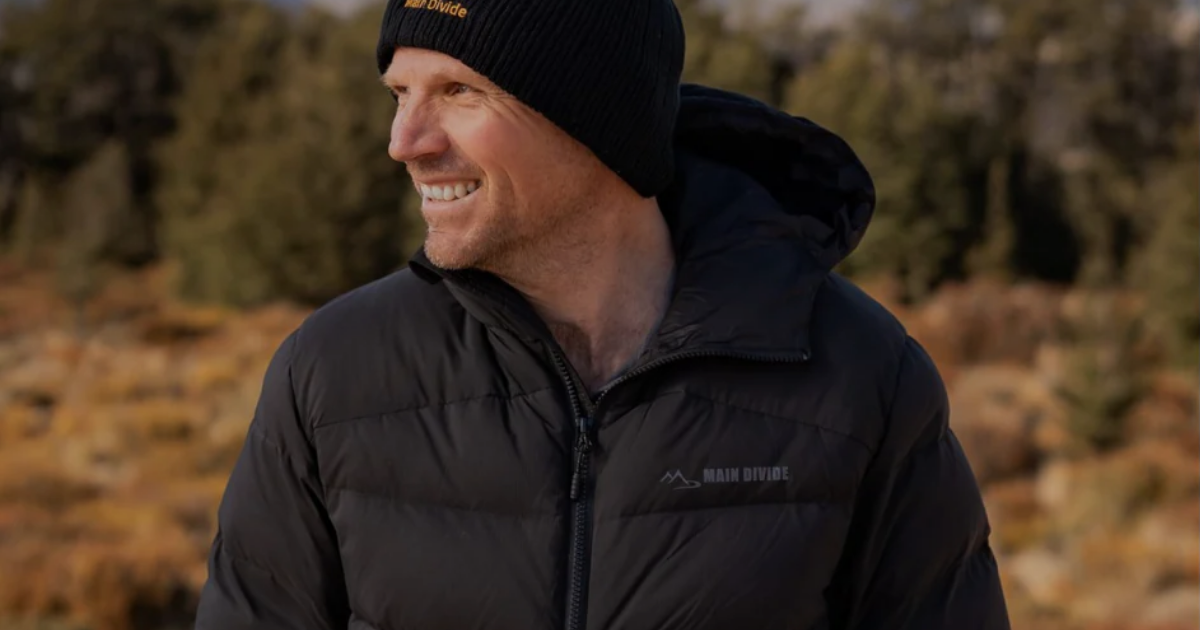
The Main Divide Ranger Down Puffer Jacket is designed specifically for the conditions NZ hunters actually hunt in - cold and damp, not cold and dry. It's built around three layers of protection: premium 850 fill power goose down treated with DownTek® water-repellent technology, a DWR-coated 6.6 ripstop nylon outer shell, and construction details that make it genuinely packable, durable, and dependable when it counts.
Why Most Down Jackets Let You Down in NZ
Down insulates through loft - clusters of fine filaments that trap thousands of tiny pockets of warm air next to your body. The higher the fill power rating, the more air those clusters can trap per gram of down, and the better the warmth-to-weight ratio.
The problem is what happens to those clusters when they absorb moisture. Water molecules cling to the fine filaments and force the cluster to collapse inward, destroying the air pockets that were providing insulation. Once down is wet, it's essentially useless as a thermal layer - and it takes a long time to dry out under pack conditions.
For most of the world, this is a manageable limitation. In New Zealand's backcountry, it's a real problem. Our mountains generate their own weather systems. Drizzle can persist for days. Humidity in native bush is consistently high. And you're often in that damp environment for multiple days without a proper dry-out opportunity.
That's the problem the Ranger is built to solve.
Three Layers of Protection - How the Ranger Works
Layer 1: 850 Fill Power Goose Down
Fill power measures the quality and loft of down - specifically, how many cubic inches one ounce of down occupies when allowed to expand freely. 850 fill power is premium territory - well above the 550–650 range found in budget puffers, and competitive with jackets used by mountaineers and high-altitude hunters worldwide.
Higher fill power means more warmth per gram of down, which translates directly to a lighter, more compressible jacket that performs at least as well as heavier alternatives. The Ranger uses a 90/10 down-to-feather ratio - 90% down clusters for maximum loft and warmth, 10% feather for structure.
The Ranger in size Large uses 170g of down - a meaningful fill weight that delivers genuine warmth for cold-weather hunting, not just shoulder-season comfort.
Layer 2: DownTek® Water-Repellent Treatment
This is where the Ranger separates itself from standard down jackets - and why it belongs in a NZ hunting kit specifically.
DownTek® is a DWR (Durable Water Repellency) treatment applied at the molecular level to each individual down cluster. Rather than letting moisture cling to the filaments and cause collapse, the treatment creates surface tension on each cluster - forcing water molecules to bead up and roll off, leaving the air-trapping structure intact.
The testing standard for water-repellent down is the IDFL (International Down and Feather Testing Laboratory) shake test - a global benchmark that measures how long treated down can be exposed to water while maintaining loft and insulation. The numbers:
- Untreated down: 25–60 minutes before complete saturation
- DownTek® treated down: 1,000 minutes shake test rating
- Stays dry more than 900% longer than untreated down
That gap is substantial in real-world terms. On a drizzly two-day tahr hunt, the difference between treated and untreated down can be the difference between staying warm and heading off the hill.
Importantly, DownTek® is RDS certified (Responsible Down Standard) and contains no PFOA or PFOS - the persistent fluorinated chemicals that have rightly come under environmental scrutiny. The treatment is clean chemistry, built to last the life of the jacket.
Layer 3: DWR-Coated 6.6 Ripstop Nylon Shell
Even the best-treated down needs a solid outer defence. The Ranger's shell uses 6.6 ripstop nylon - a tightly woven fabric where a fine reinforcement grid prevents any tears or snags from spreading. It's light enough to keep the jacket packable, but durable enough for the kind of use a hunting jacket actually gets.
The DWR coating on the shell adds an outer layer of water repellency - shedding drizzle and light rain before it can work through to the down beneath. On a mountain where conditions shift fast, that outer barrier buys you time and keeps the insulation doing its job.

Where the Ranger Sits in Your Layering System
The Ranger is a mid-to-outer insulation layer - not a waterproof shell, and not a base layer. Understanding where it sits helps you get the most out of it on the hill.
The optimal system for cold, variable NZ conditions:
- Base layer: HTM 120 Nuyarn® Merino Crew (wicking, thermoregulating, fast-drying next to skin)
- Mid layer: HTM 145 Nuyarn® Merino Hoodie (breathable warmth for active movement)
- Insulation: Ranger Down Puffer Jacket (serious warmth at rest - glassing, camp, cold pack-outs)
- Outer shell: DWR or waterproof shell for sustained heavy rain
The Ranger is designed to wear over a base and mid layer in your usual size - no need to size up. The cut is intentional: close enough to trap warmth without being restrictive, with enough room that the insulation can do its job without compression.
For hunters who run warm on the climb but need real warmth on the glassing spot, the Ranger packs into its included stow bag and sits at the top of the pack - ready to pull out the moment you stop moving. At 670g for a size Large, it’s light enough to carry every day and warm enough to matter when conditions change.
Design Details That Matter in the Field
A jacket's features either work for a hunter or they don't. Here's what we built into the Ranger and why each decision was made for field use - not showroom appeal.
Adjustable Cord Lock Hood
A hood that can be cinched tight against wind and drizzle makes a significant difference in warmth retention at rest. The Ranger's hood is adjustable so it seals properly around different helmet and hat combinations, or worn directly against your face when conditions require it.
High Zip Neck
Core warmth starts at the neck. The high-zip collar provides a draft-free seal that most mid-zip puffers simply don't offer. On a cold glassing spot with wind, that extra coverage around the neck and chin earns its place.
Adjustable Wrist Straps
Draughts at the wrists are a common heat loss point that's often overlooked in puffer design. The Ranger's adjustable wrist straps let you close off that gap when you need to - particularly useful when the jacket is worn as an outer layer in lighter conditions.
Inner Chest Phone Pocket
Access to your phone, PLB, or GPS in cold conditions is a safety and practicality matter. The inner chest pocket keeps devices warm (cold kills battery life fast) and accessible without removing the jacket.
Ripstop Shell
The ripstop grid in the outer nylon prevents any snag or abrasion from running - useful when you're moving through bush, scrambling over rock, or packing in tight against a heavy load.
Stow Bag
The Ranger packs into its own stow bag, sitting compact at the top of a pack. For hunters who are constantly making the call on whether to carry warmth or save weight, this packability changes the equation - it's small enough that there's no real reason to leave it behind.
Ranger Down Puffer Jacket - Key Specifications
- Insulation: 850 fill power premium goose down, 90/10 down-to-feather ratio
- Down treatment: DownTek® water-repellent technology (no PFOA, no PFOS, RDS certified)
- Outer shell: 6.6 Ripstop Nylon with DWR coating
- Fill weight (size Large): 170g of DownTek® treated down
- Total weight (size Large): 670g
- Shake test rating: 1,000 minutes - stays dry 900%+ longer than untreated down
- Certification: RDS (Responsible Down Standard)
- Fit: Designed to wear over base and mid layer in your usual size
When the Ranger Earns Its Place
Rather than talk about the jacket in abstract, here are the specific NZ hunting scenarios where the Ranger's combination of technologies matters most.
Roar Hunting in the Wet Months
March and April can go either way in the South Island high country. You might get a clear run; you're more likely to get cold mornings, drizzle on the tops, and condensation on the valley floor. The Ranger handles the stop-start nature of roar hunting - warm enough at rest on the lookout, packable enough to not be a burden on the stalk.
Tahr and Chamois in Alpine Conditions
Cold, exposed ridge country with wind and moisture is exactly the environment where untreated down fails. The Ranger's DownTek® treatment and DWR shell mean you can sit on a rock face glassing for hours without the insulation slowly losing its battle with the ambient dampness.
Multi-Day Fiordland Trips
Fiordland is in a class of its own for sustained damp. Rain, high humidity, and frequent river crossings are the norm. A standard down jacket is a liability here; the Ranger is an asset. The 1,000-minute shake test rating means even in Fiordland's persistent drizzle, the insulation holds its loft and keeps doing its job.
Late Season Campsites
Cold nights at altitude, damp ground, and no option to properly dry gear between days - this is when the DownTek® treatment matters at camp as much as it does on the hill. The Ranger maintains its warmth even when it'sabsorbed ambient moisture, rather than progressively losing insulation value like untreated down.
Caring for Your Down Jacket
A well-cared-for down jacket can last many seasons. The Ranger's construction rewards basic maintenance - and the DownTek® treatment is durable enough to survive machine washing without degrading.
- Warm hand wash using a down-specific detergent (no regular detergent - it strips natural oils and DWR treatment)
- Tumble dry on low heat with a few clean tennis balls - this breaks up any clumping and restores loft
- Never wring or twist the jacket - this can damage baffles and redistribute down unevenly
- Store loosely - hanging or uncompressed in a breathable bag. Long-term compression in a stuff sack reduces down loft permanently
- If DWR performance reduces over time, a low-heat tumble dry cycle or DWR spray can revive it
See also: How to Care for Your Hunting Gear for a full guide to extending the life of all your Main Divide kit.
Warmth You Can Rely On - In the Conditions NZ Actually Delivers
The NZ backcountry doesn't give you the option to wait for ideal weather. You plan your trip, you commit, and you manage whatever the mountains throw at you. That means your gear needs to work in the conditions you're actually in - not the ones you hoped for.
The Ranger Down Puffer Jacket is built for that reality. 850 fill power warmth without the bulk. DownTek® protection against the damp. A shell that handles the terrain. And construction designed to go back in the pack and come back out mission after mission.
When the temperature drops and the drizzle sets in - this is the jacket that earns its place.


Leave a comment
This site is protected by hCaptcha and the hCaptcha Privacy Policy and Terms of Service apply.