
Merino vs Synthetic: Which Base Layer is Right for NZ Hunting?
It's one of the most common gear questions in the NZ hunting community - and one that gets a lot of vague answers. "Merino is better for multi-day trips." "Synthetic dries faster." "It depends on what you're doing."
All of that is true, and none of it is particularly useful when you're trying to decide what to actually buy. So here's a straight comparison - what each material does well, where each one falls short, and where Nuyarn® Merino changes the traditional calculation.
We'll be honest about the weaknesses of merino, including our own product. The goal is to help you make the right decision for the hunting you actually do.
What a Base Layer Is Actually Doing
Before comparing materials, it's worth being precise about the job. A base layer has one primary function: move moisture away from your skin fast enough that you don't get chilled when you stop moving.
In NZ backcountry hunting, that means handling the sweat from a hard climb and then performing as an insulating layer when you stop to glass for an hour in the wind. It needs to do both - wick moisture efficiently and provide some warmth - often within minutes of each other.
Secondary considerations that matter for NZ multi-day trips: odour resistance (you're wearing it for days), warmth when damp (NZ weather guarantees some moisture exposure), and durability under pack straps and daily pack-and-unpack.
Where Synthetic Wins
Synthetic base layers - primarily polyester - have two genuine advantages over conventional merino, and it's worth being clear about both.
Drying speed
Polyester fibres don't absorb moisture - they move it along the fibre surface and release it into the air. Synthetic base layers dry significantly faster than conventional merino. On a single hard day of hunting in warm weather where you'll sweat heavily and want fast recovery, this is a real advantage.
Durability
Synthetic fibres are more abrasion-resistant than merino. Under heavy pack straps, repeated compression, and the daily grind of a long season, synthetic fabric holds up better than conventional ring-spun merino, which tends to thin and pill over time.
Price
A quality synthetic base layer costs less than equivalent-performance merino. If budget is a constraint, synthetic gives you functional moisture management at a lower entry point.
Where Merino Wins
For most NZ backcountry hunting - particularly multi-day trips - merino's advantages outweigh its weaknesses. Here's where it genuinely pulls ahead.
Odour resistance
This is merino's most significant practical advantage for NZ hunting, and it's not marginal. Synthetic fabric builds strong, persistent body odour within one to two days of hard wear. Most hunters know the experience: a synthetic base layer that was fine on day one becomes unpleasant by day two and actively offensive by day three.
Merino's natural lanolin content inhibits the growth of odour-causing bacteria. A quality merino base layer worn hard for three to five days remains wearable in a way that synthetic simply doesn't. On a five-day tahr hunt or a roar trip where washing isn't an option, this is the difference between one base layer in the pack and two.
Thermoregulation
Merino wool fibres have a natural crimp structure that creates insulating air pockets. When you're cold, those pockets trap warm air. When you're hot, the moisture absorbed into the fibre core evaporates and provides a slight cooling effect. The result is a fabric that performs across a wider temperature range than synthetic - important in NZ conditions where a single day can swing fifteen degrees.
Warmth when slightly damp
This is the one that matters most in NZ's wet-cold conditions. When synthetic fabric gets wet from sweat or rain, it loses insulation value - the moisture sits against your skin and chills you. Merino absorbs some moisture into the fibre core as part of its thermoregulation process. Even when slightly damp, it retains meaningful warmth.
In a dry-cold alpine environment, this distinction matters less. In NZ bush and high country, where you're dealing with humidity, morning dew, and persistent drizzle as much as clean rain, it matters considerably.
Silence
Merino is a naturally quiet fabric. Synthetic base layers produce a low-level swishing sound against other layers and vegetation. In a spot-and-stalk context - closing the distance on a stag or working quietly through scrub - silent fabric is a practical advantage, not a marketing one.
The Traditional Weakness of Merino - and What Nuyarn® Changes
Merino has one well-known weakness: conventional ring-spun merino dries slowly. The spinning process that twists fibres tightly together compresses the natural air pockets in the wool, which slows moisture transfer and extends dry time compared to synthetic.
For decades this was the trade-off: accept slower drying in exchange for merino's other advantages, or take synthetic's faster drying and manage the odour consequences.
Nuyarn® Merino changes this equation. The Nuyarn® spinning process, developed in Christchurch, NZ, wraps merino fibres around a nylon filament without twisting them - preserving the natural loft and aeration of the fibre. The result is a yarn structure with significantly more volume and faster moisture transfer than ring-spun merino.
In practical terms: Nuyarn® Merino dries faster than conventional merino while retaining the same thermoregulation, odour resistance, and softness. It also produces a stronger, stretchier yarn than ring-spun construction - addressing the durability concern at the same time.
It doesn't dry as fast as straight polyester in a direct comparison. But it closes the gap considerably - and for multi-day NZ hunting, the odour resistance and thermoregulation advantages remain fully intact.
The Honest Comparison - Side by Side
|
|
Conventional Merino |
Synthetic (Polyester) |
|
Moisture wicking |
Good |
Very good |
|
Drying speed |
Slow |
Fast |
|
Odour resistance |
Excellent (3–5 days) |
Poor (1–2 days) |
|
Warmth when damp |
Good |
Poor |
|
Thermoregulation |
Excellent |
Moderate |
|
Durability |
Moderate |
Good |
|
Silence |
Excellent |
Moderate |
|
Price |
Higher |
Lower |
|
|
Nuyarn® Merino |
Synthetic (Polyester) |
|
Moisture wicking |
Very good |
Very good |
|
Drying speed |
Good (improved) |
Fast |
|
Odour resistance |
Excellent (3–5 days) |
Poor (1–2 days) |
|
Warmth when damp |
Good |
Poor |
|
Thermoregulation |
Excellent |
Moderate |
|
Durability |
Good (improved) |
Good |
|
Silence |
Excellent |
Moderate |
|
Price |
Higher |
Lower |
Which One is Right for the Hunting You Do?
Choose merino (Nuyarn®) if:
- You're doing multi-day backcountry trips - roar, tahr rut, hut-to-hut missions - where washing between wears isn't an option
- You're hunting in NZ's variable conditions where temperature swings across a single day are significant
- You're doing spot-and-stalk where fabric silence matters
- You want to carry one base layer rather than two spares
- You're hunting near scent-sensitive game in close country
Choose synthetic if:
- You're doing single-day hunts and washing between every session
- You run very hot and drying speed is your priority above all else
- Budget is a firm constraint and you're comfortable managing the odour with more frequent washing
For most NZ backcountry hunters:
Merino - specifically Nuyarn® Merino - is the right call. The conditions we hunt in favour merino's strengths: multi-day trips, variable temperature, humidity, and wet-cold exposure. The drying speed gap that was merino's historical weakness has narrowed significantly with Nuyarn® construction. The odour advantage remains decisive for anyone spending more than two days in the hills.
Main Divide's Nuyarn® Merino Base Layers
HTM 120 Nuyarn® Merino Men's and Women's Long Sleeve Crew
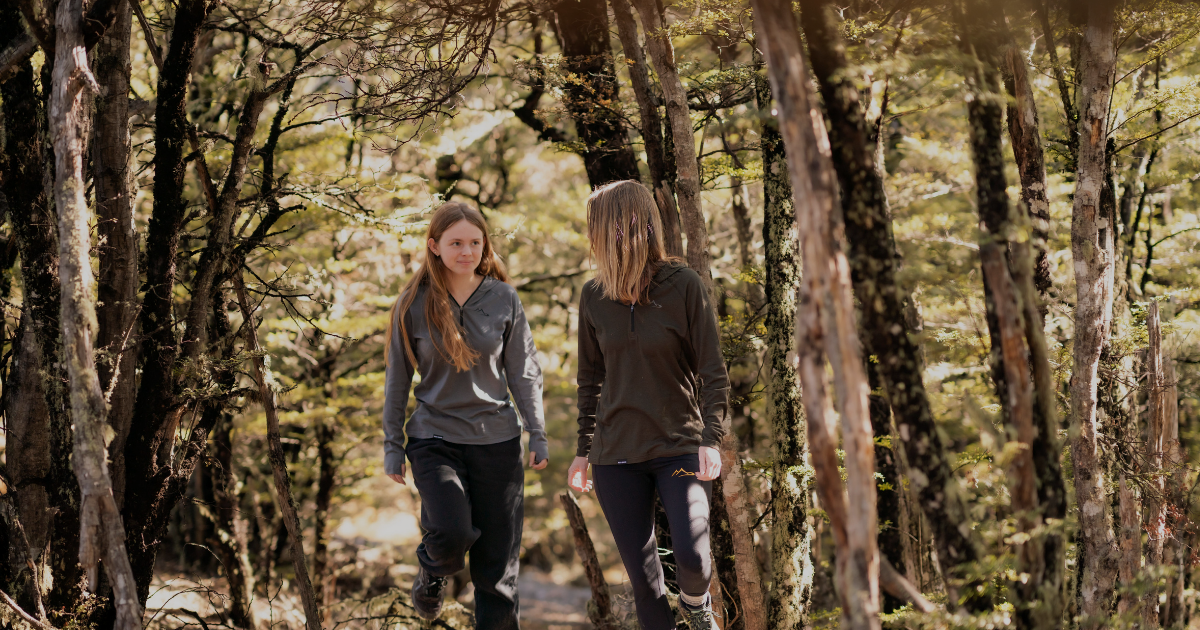
120gsm - Main Divide's lightweight base layer built for active hunting. Right weight for hard climbs without overheating. Nuyarn® construction gives it faster moisture transfer and drying than conventional merino, with the full thermoregulation and odour resistance advantages intact.
Available in: men's and women's cuts. Black, grey, and forest green.
HTM 145 Nuyarn® Merino Men's and Women's Hunting Hoodie
145gsm - works as both a mid layer over the HTM 120 and as a standalone in mild-cool conditions. Adds warmth without bulk, hood included. Same Nuyarn® construction throughout.
Available in: men's and women's cuts. Cool grey, forest green, and black.
Frequently Asked Questions
Is merino or synthetic better for NZ hunting?
For most NZ backcountry hunting – especially multi-day trips – merino outperforms synthetic due to its natural odour resistance, thermoregulation across variable temperatures, and warmth retention when slightly damp. Nuyarn® Merino closes the traditional gap on drying speed, making it the strongest all-round choice for NZ conditions. Synthetic holds an edge for single-day hunts where drying speed is the priority and washing between sessions is guaranteed.
Does merino dry slowly compared to synthetic?
Traditional ring-spun merino dries slower than synthetic – this has been merino’s main weakness. Nuyarn® Merino, which uses a twist-free spinning process that preserves fibre loft, dries significantly faster than conventional merino while retaining all the thermoregulation and odour-resistance advantages.
Why does odour matter so much for hunting base layers?
On multi-day NZ backcountry hunts you’re wearing the same base layer for three to five days without washing. Synthetic fabric builds strong body odour within one to two days of hard wear. Merino’s natural properties resist odour-causing bacteria significantly longer – most hunters get three to five days from a merino base layer before it becomes a problem. This matters for comfort and as a practical hunting advantage near scent-sensitive game.
Is Nuyarn® Merino better than standard merino for hunting?
Yes, for active hunting use. Nuyarn® Merino is constructed by wrapping merino fibres around a nylon filament without twisting them, preserving the natural loft of the fibre. This produces faster moisture transfer, quicker drying, greater durability, and more stretch than conventional ring-spun merino – while retaining the same thermoregulation, odour resistance, and softness.

Leave a comment
This site is protected by hCaptcha and the hCaptcha Privacy Policy and Terms of Service apply.