How to Pack for a NZ Backcountry Hunt - A Real-World Guide
Every experienced NZ hunter has packed a bag they regretted. Too heavy on day one, legs cooked by day two, and a long pack-out that felt twice as far as it should have. Or the opposite - stripped back for weight and caught out when the weather turned on night three.
Packing for a NZ backcountry hunt is a genuine skill, and it's one that gets refined over seasons rather than figured out on a single trip. This guide covers the decisions that matter most - clothing, shelter, food, safety gear - and how to think about weight without cutting corners in the wrong places.
It's written for multi-day self-guided hunting in New Zealand's backcountry: hut-based or tent-based trips of three to seven days, the kind of hunting most Kiwi hunters actually do.
The Foundational Rule: Weight Compounds
Every kilogram you carry on a NZ backcountry hunt is felt across the full trip, not just on day one. A pack that feels heavy but manageable at the carpark becomes a serious physical problem by day three on steep South Island terrain. It slows you down, increases injury risk, and degrades the quality of decisions you make in the field.
The goal isn't to go ultralight for its own sake. It's to carry exactly what you need and nothing that's just covering a hypothetical. Every item in your pack should have a clear answer to: what specific problem does this solve?
With that framing, here's how to work through each category.
1. Clothing - Your Most Important Decisions
Clothing is where most hunters either nail their pack weight or blow it. The temptation is to pack for every possible scenario. The reality is that a well-chosen layering system covers the full range of NZ conditions without requiring a separate piece for each one.
The three-layer system
A moisture-wicking base layer, an insulating mid layer, and a weatherproof outer layer. That's the foundation. Everything else is supplementary.
-
Base layer - HTM 120 Nuyarn® Merino Crew: 120gsm, lightweight, moves moisture fast on hard climbs. Nuyarn® construction dries significantly faster than conventional merino and resists odour for three to five days of hard wear. For a five-day trip this means one base layer, not two - a direct weight saving.
-
Mid layer - HTM 145 Nuyarn® Merino Hoodie: 145gsm, adds warmth without bulk, works as a standalone in mild conditions. The hood covers neck and ears without a separate beanie in most conditions. One piece doing the job of two.
-
Outer layer - Ranger Down Puffer Jacket: 850 fill power goose down with DownTek® water-repellant treatment. Compresses small, deploys fast at cold stops, and holds warmth in damp conditions. Add a waterproof shell over the top in sustained precipitation.
The clothing weight calculation
The single biggest saving in clothing weight on a multi-day hunt is reducing spare base layers. Conventional synthetic or standard merino base layers need to be cycled - most hunters pack two or three for a five-day trip. With Nuyarn® Merino's odour resistance, one base layer and one mid layer covers a five-day hunt. The weight saving across spares, plus the lighter construction of the Nuyarn® layers, adds up to a meaningful reduction in your clothing allocation.
What else to include
- Waterproof shell jacket and pants - non-negotiable for NZ conditions. If you don't own one, prioritise it above everything else on this list.
- Warm hat and gloves - pack them even in summer. NZ weather at elevation doesn't negotiate.
- Spare socks - two pairs minimum. Wet feet are the fastest way to turn a good trip into a bad one.
- Camp layer - the HTM 145 hoodie doubles as your camp layer. You don't need a separate piece.
2. Shelter - Match It to Your Trip
Shelter is your second-heaviest category after food, and the right choice depends entirely on where you're going.
DOC huts
If your route uses huts, your shelter weight drops to zero. Check hut availability and book ahead during busy seasons - the roar period especially sees high demand on popular Canterbury and Otago huts. Always carry a bivvy bag regardless, for the scenario where you don't make the hut.
Tent
For tent-based hunting, a two-person tent in the 1.5–2kg range is a reasonable weight target for one hunter. Go lighter if the terrain and conditions allow it, heavier if you're heading into serious alpine or West Coast country where a flimsy tent becomes a safety issue in a North westerly.
A good rule: don't compromise on tent quality for weight saving alone. A tent failure in NZ backcountry conditions is a serious problem. Buy well once.
Sleeping bag and mat
Match your sleeping bag rating to the coldest expected overnight temperature, with a reasonable margin. In the South Island high country from April onwards, a bag rated to -5°C or colder is appropriate. Don't underspec your bag to save weight - being cold overnight degrades every subsequent day's hunting.
A quality sleeping mat is as important as the bag. Cold ground transfers heat out of your body regardless of how warm your bag is. For NZ backcountry conditions, an R-value of 3–4 minimum for shoulder season, 5+ for winter or alpine.
3. Food - Calories Per Gram
Food is your heaviest consumable category, and the calculation is simple: you need enough calories to sustain hard physical effort across multi-day terrain, in a form that's as light and compact as possible.
Freeze-dried and dehydrated meals
The standard for NZ backcountry hunting for good reason. Lightweight, high-calorie, quick to prepare after a long day, and the range has improved significantly over the past decade. Budget around 600–800g of food per day for active hunting - adjust up in cold conditions where your body burns more.
A good freeze-dried meal plus snacks for a full day weighs roughly 600–700g and delivers 2,500–3,000 calories. That's a strong weight-to-energy ratio for terrain that demands it.
Snacks matter as much as meals
Hunting burns calories unevenly - hard bursts of climbing followed by long static glassing sessions. Consistent snacking through the day keeps energy and decision-making sharp. Nuts, jerky, chocolate, muesli bars, and dried fruit are proven and packable. Don't underestimate the morale value of something you actually enjoy eating on day four.
Water
NZ backcountry water is generally clean and reliable from streams and rivers above farm influence. A lightweight filter or purification tablets covers you for situations where water quality is uncertain. Carry 1.5–2L capacity minimum and know where your next water source is.
4. Safety and Navigation - Non-Negotiables
These items are not where you save weight.
PLB
A Personal Locator Beacon is the single most important safety item for any NZ backcountry hunt. Cell coverage is absent in most hunting country. If you're injured, overdue, or in a rapidly deteriorating weather situation, a PLB is your only reliable link to search and rescue. Carry it on your person - not in your pack - so it's accessible if you're separated from your gear.
If you don't own one, hire one. DOC and most major outdoor retailers offer PLB hire. There is no acceptable reason to head into NZ backcountry without one.
Navigation
- Topo maps of the area - printed and waterproofed, not just on a phone
- Compass - a phone compass fails without battery; a Silva doesn't
- GPS device or app (Topo50 NZ, NZ Topo Map) as a supplement, not a replacement for paper
First aid
A compact first aid kit covers the most common backcountry injuries: blisters, cuts, twisted ankles, and basic wound management. Include blister treatment specifically - it's the most common reason NZ hunters cut trips short. Painkillers, antihistamines, and any personal medication round out the kit.
Emergency bivvy
A lightweight emergency bivvy bag adds under 200g and covers the scenario where you can't reach shelter before dark or weather closes in. It's cheap insurance and lives at the bottom of your pack permanently.
5. The Rest - Prioritised by Function
Optics
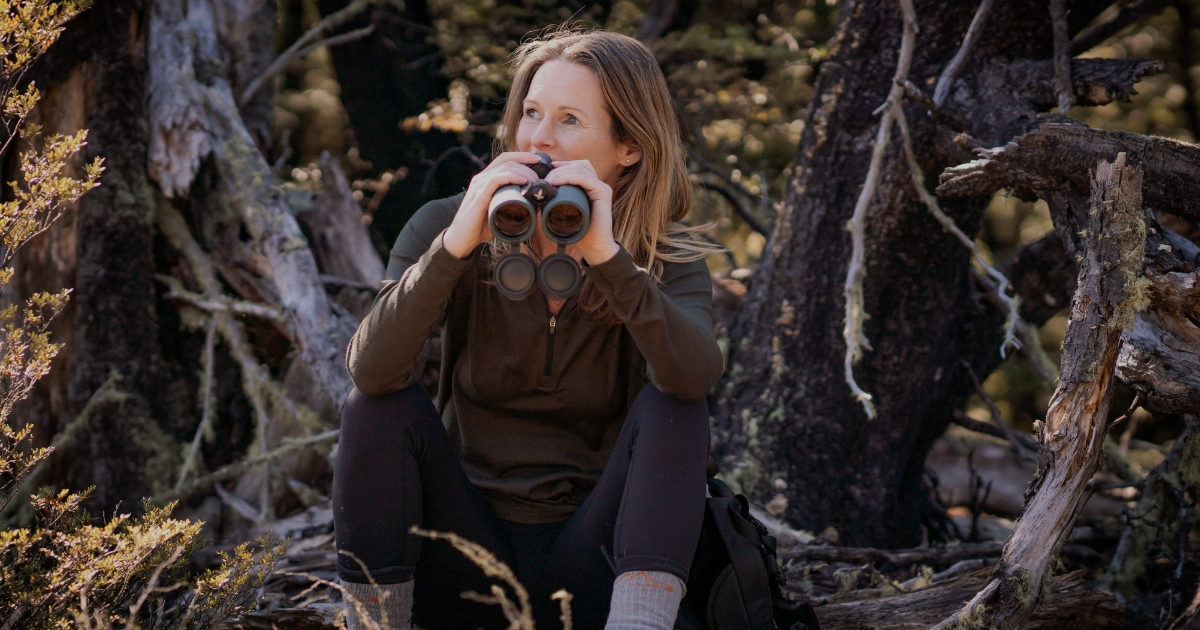
Quality binoculars are not optional on a NZ backcountry hunt. 8x42 or 10x42 is the standard - enough magnification to assess animals at distance without the weight penalty of larger glass. A lightweight tripod adaptor extends glassing endurance significantly on long sessions.
A spotting scope adds weight but earns its place on open-country tahr and chamois hunting where you're assessing trophy quality at 500m+. On a bush deer hunt, leave it at home.
Lighting
- Headlamp with spare batteries - pre-dawn starts and late pack-outs are guaranteed
- Small backup torch - headlamp failure in the dark is a serious problem
Knife and game care
- A quality fixed-blade hunting knife - foldable knives lack the leverage for field dressing
- Game bags - lightweight, breathable, enough for your target animal
- Lightweight pack frame or meat shelf if you're going in without helicopter support
Communication
- Leave a detailed trip plan with someone at home - where you're going, access point, expected return
- Satellite communicator (Garmin in Reach or similar) for longer trips - two-way messaging where cell doesn't reach
Pack Weight Targets - A Realistic Guide
For a three to five day NZ backcountry hunt, a loaded pack weight of 18–22kg is a reasonable target for most hunters. Below 15kg is achievable on fast-and-light missions with ultralight shelter and minimal food. Above 25kg becomes a serious liability on steep NZ terrain and meaningfully increases injury risk across multi-day trips.
The clothing category is where most hunters have the most control over weight without compromising function. Choosing a performance merino layering system over bulkier synthetic alternatives, and reducing spare clothing through better fabric odour management, typically saves 1–2kg in this category alone.
The Pack Itself
Choose a pack sized to your trip length. For a three to five day hunt with tent: 65–80L. For hut-based hunting: 50–65L. For a day hunt: 25–35L daypack.
Fit matters more than brand. A pack that transfers load poorly to your hips will destroy you on a long climb regardless of how light your kit is. Get fitted properly, or at minimum adjust the torso length correctly before heading in.
Waterproof your pack contents with a liner or individual dry bags. NZ rain doesn't care about your pack's claimed water resistance.
Frequently Asked Questions
How heavy should a NZ backcountry hunting pack be?
For a three to five day NZ backcountry hunt, a loaded pack weight of 18–22kg is a reasonable target. Below 15kg is achievable on fast-and-light missions. Above 25kg becomes a liability on steep NZ terrain and increases injury risk significantly over multi-day trips.
How many clothing layers do I need for a NZ backcountry hunt?
A three-layer system covers most NZ backcountry conditions: a moisture-wicking merino base layer, an insulating mid layer, and a weatherproof outer. For multi-day trips, Nuyarn® Merino’s odour resistance means you can pack one base layer for a five-day hunt rather than carrying multiple spares – a direct weight saving.
Is a PLB mandatory for NZ backcountry hunting?
Not legally mandatory, but strongly recommended by DOC and the Mountain Safety Council for any backcountry trip. Cell coverage is absent in most NZ hunting country. A PLB is the only reliable means of emergency contact if you’re injured or overdue.
What food should I pack for a multi-day NZ hunt?
Freeze-dried and dehydrated meals are the standard – lightweight, calorie-dense, and quick to prepare. Budget around 600–800g of food per day for active hunting conditions. Supplement with high-energy snacks throughout the day. Real Meals freeze-dried, made in New Zealand, is a popular and well-regarded option among NZ hunters.

Leave a comment
This site is protected by hCaptcha and the hCaptcha Privacy Policy and Terms of Service apply.